Assessing the suppression difficulty of wildland fires for initial attack response
OVERVIEW
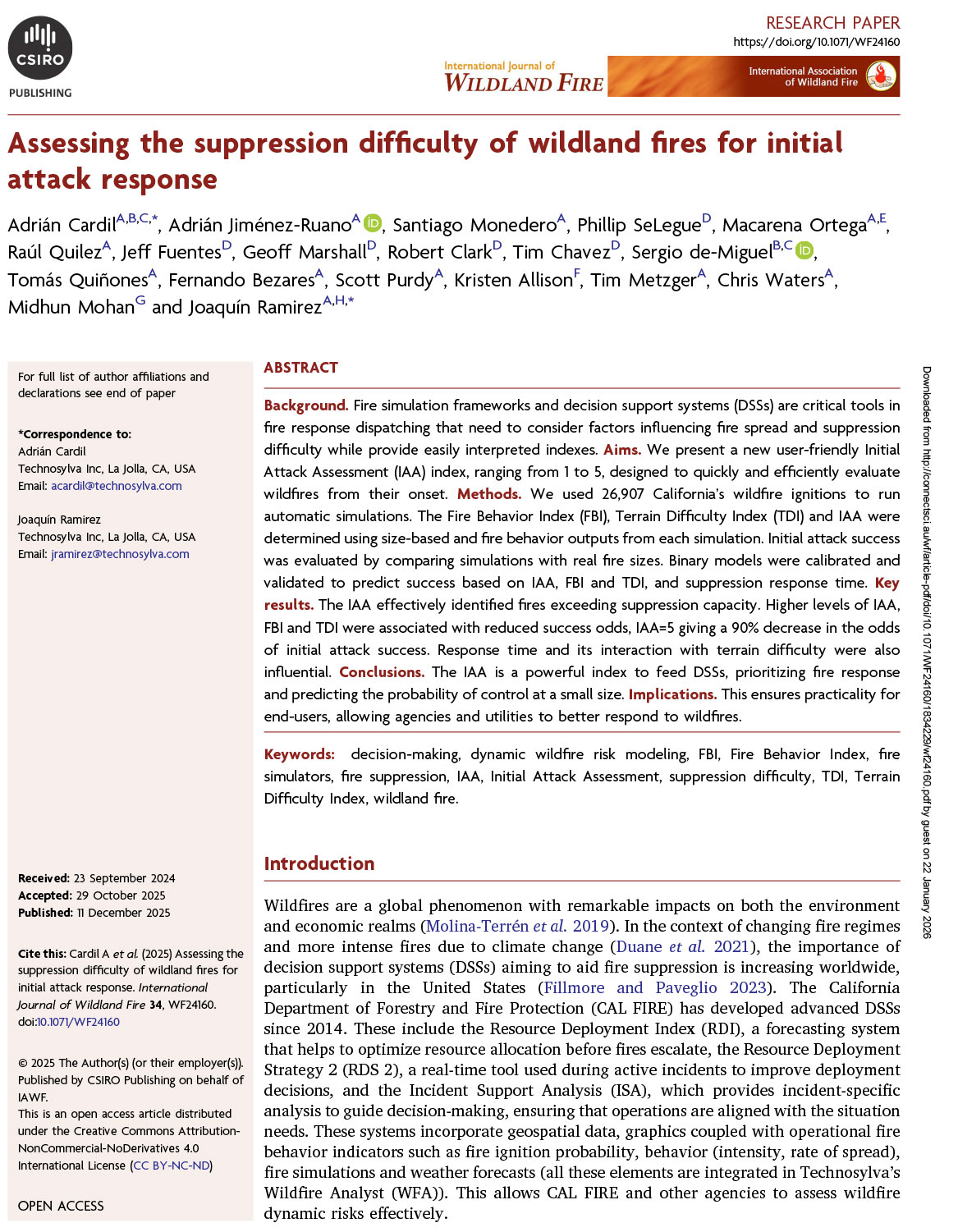
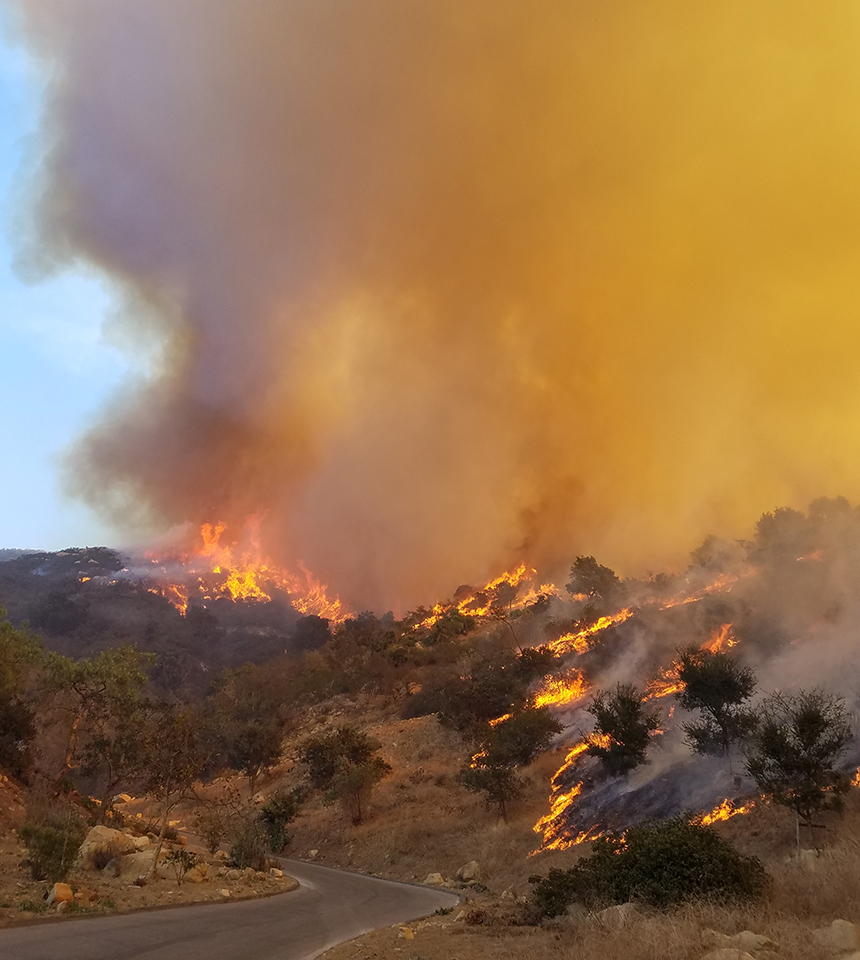
Assessing the suppression difficulty of wildland fires for initial attack response, this article presents a new Initial Attack Assessment (IAA) index designed to help fire agencies rapidly gauge how hard a wildfire will be to contain in its first hours. Using more than 26,000 wildfire ignitions in California from 2020 to 2023, the authors simulate fire behavior and terrain conditions to translate complex fire science into a simple 1–5 scale that front-line decision-makers can interpret at a glance. Chris Waters and co-authors show how this scale can be embedded in operational decision support platforms to prioritize incidents, allocate resources, and anticipate when fires are likely to exceed initial attack capacity.
The IAA index combines a Fire Behavior Index (FBI) and a Terrain Difficulty Index (TDI), capturing factors such as rate of spread, flame length, slope, accessibility, fuel types, and barriers to ground operations. Higher IAA levels are strongly associated with reduced odds of initial attack success; for example, fires rated IAA-5 show about a 90% decrease in the odds of being contained under 4 hectares compared with those rated IAA-1. The analysis also highlights how response time interacts with difficult terrain: as both response delay and terrain complexity increase, the probability of successful containment during the first two hours drops markedly, underscoring the importance of both rapid dispatch and pre-positioned resources.
Beyond the statewide statistical work, the article illustrates IAA performance during high-impact events, including the January 2025 Palisades and Eaton fires near Los Angeles and several major incidents in Oregon, Colorado, Montana, and Spain. In these case studies, the index successfully flags the most challenging fires—those with extreme behavior, complex topography, or both—as high IAA classes, aligning with outcomes such as very large final fire sizes, structure loss, and fatalities. The authors argue that by embedding IAA into existing wildfire decision support systems used by CAL FIRE, utilities, and agencies in the US and Europe, organizations can better anticipate escaped fires, justify surge resources, and manage growing wildfire risk under a changing climate.